Antonio123
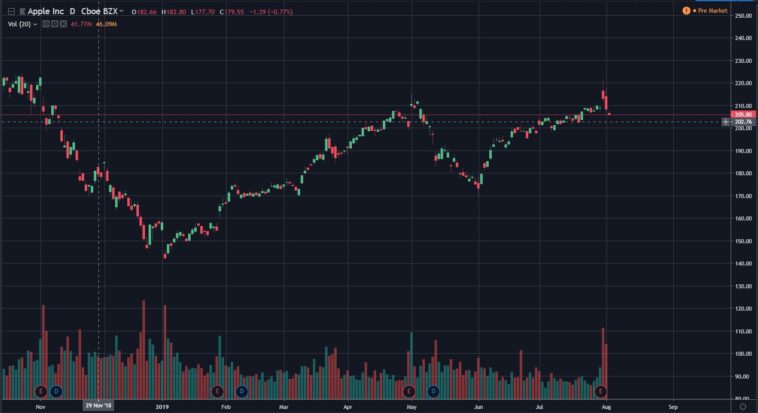
Understanding how to read a stock chart is one of the major skills that anyone just starting their investment should know. Whether it’s buying your first stock or trying to understand market trends, a stock chart helps make wiser decisions.
But to beginners, they all look confusing: filled with lines, candles, dates, prices, and indicators.
Don’t worry.
This tutorial will show how to read a stock chart in the most straightforward manner possible, step by step, with no technical jargon.
What is a Stock Chart?
A stock chart will show you how the price of a stock has moved over time.
It helps you answer questions like:
-
Does it follow an uptrend or a downtrend?
-
A good time to buy, or shall we wait?
-
How volatile is the stock?
-
What is the trend—long term or short term?
Think of a stock chart as a sort of “price history report” for the shares of a particular company.
Stock Chart Types: A Simplified Explanation
Before trying to read a stock chart, you should know what the most common types are:
1. Line Chart (Simplest)
It shows a line connecting the closing prices of the stock.
Perfect for beginners.
2. Bar Graph
Displays the high, low, open, and close for each day as a bar.
3. Candlestick Chart (Most Popular)
Looks like small “candles” with wicks.
Gives a complete picture of market movement—open, high, low, and close.
Most traders use this.
To the uninitiated, candlestick charts are easiest once you understand them.
Important Components of a Stock Chart Explained
Let’s break down the important elements of any stock chart.
1. The X-Axis (Bottom Area)
This shows time.
Depending on the view, it can display:
-
1 day
-
1 week
-
1 month
-
6 months
-
1 year
-
5 years
-
All-time
Always select a larger span of time to understand the general trend.
2. The Y-Axis (Right Side)
This reflects the price of the stock.
As the price increases or decreases, candlesticks/lines move up or down accordingly.
3. Candlesticks: Most Important Part
Each candlestick represents what happened to the price for a specific period (e.g., 1 day or 1 hour).
A candlestick has:
-
Body — the thick part
Shows opening and closing prices. -
Wicks (Shadows) — thin lines
Displays the day’s high and low prices. -
Colors: Green & Red
-
Green candle → price went up
-
Red candle → price went down
-
Example:
If the stock opened at ₹100 and closed at ₹110 → Green candle.
If it opened at ₹110 and closed at ₹100 → Red candle.
4. Volume Bars (Bottom of the Chart)
These vertical bars show how many shares are traded.
-
High volume = strong buying or selling
-
Low volume = less interest or sideways movement
Volume confirms trends.
Examples:
-
Price rising + high volume = strong uptrend
-
Price rising + low volume = weak uptrend
5. Trend Lines
Trend lines show the general direction of the stock:
-
Uptrend — making higher highs and higher lows
Good for buyers. -
Downtrend — making lower highs and lower lows
Risky for beginners. -
Sideways Trend — price moves within a range
Neutral zone.
You don’t need expert skills—just observe the direction of the candles.
6. Support and Resistance Explained for Beginners
Support
A price level where the stock stops falling and bounces upward.
Example: Stock repeatedly touches ₹150 and goes up → support.
Resistance
A price level where the stock stops rising and falls back.
Example: Stock repeatedly fails to cross ₹200 → resistance.
These levels help decide entry and exit points.
How to Read a Stock Chart: Step-by-Step (Beginner Tutorial)
Let’s keep this simple.
Step 1: Choose a Good Charting Platform
You can use:
-
TradingView
-
Google Finance
-
Yahoo Finance
-
Moneycontrol (India)
These platforms allow changes in chart types and timeframes.
Step 2: Choose the Timeframe
For beginners:
-
1-year chart → Understand long-term trend
-
6-month chart → Medium-term view
-
1-day chart → Too short-term; avoid initially
Start with longer timeframes for clarity.
Step 3: Identify the Trend
Look at the direction of the price movement.
Ask:
-
Is the price going up?
-
Is it moving down?
-
Is it stuck in a range?
Example:
Price moves from ₹100 to ₹150 over 6 months → Uptrend.
Step 4: Review Candlestick Behavior
No need to memorize complex patterns. Just observe:
-
More green candles or red?
-
Long or short candles?
-
High or low volatility?
-
Closing near high or low of the day?
Even these basics help a lot.
Step 5: Check Volume
Volume tells how strong the trend is.
Examples:
-
Price rising + increasing volume = strong buying
-
Price falling + increasing volume = strong selling
-
Price rising + low volume = weak trend
Volume helps avoid false signals.
Step 6: Identify Support Levels
Check where the price touched multiple times and bounced.
Example:
Stock fell to ₹250 on three occasions → Support at ₹250.
Step 7: Identify Resistance Levels
Check where the stock repeatedly stopped rising.
Example:
Stock touched ₹350 multiple times without crossing → Resistance at ₹350.
Step 8: Compare Current Price with Past Movements
Ask:
-
Is today’s price cheaper or more expensive vs last 6 months?
-
Is it close to support or resistance?
-
Is it in an uptrend or downtrend?
This prevents buying at the wrong time.
Common Mistakes Beginners Make (Avoid These!)
-
Considering only today’s price
-
Buying just because a stock has dropped
-
Ignoring volume
-
Adding too many indicators
-
Checking charts too frequently
Why Learning to Read Charts Matters
Reading charts helps you:
-
Make informed decisions
-
Avoid emotional buying
-
Understand market behavior
-
Choose correct entry and exit points
-
Reduce risk
-
Increase confidence
Even long-term investors benefit.
Final Thoughts
A stock chart is simply a graphical narrative of stock price movement. Knowing the trend, candlesticks, volume, support, and resistance helps you read any chart with confidence. You don’t have to be a trader to use charts—long-term investors gain from them too.
This post was created with our nice and easy submission form. Create your post!