

 Mk Aulten

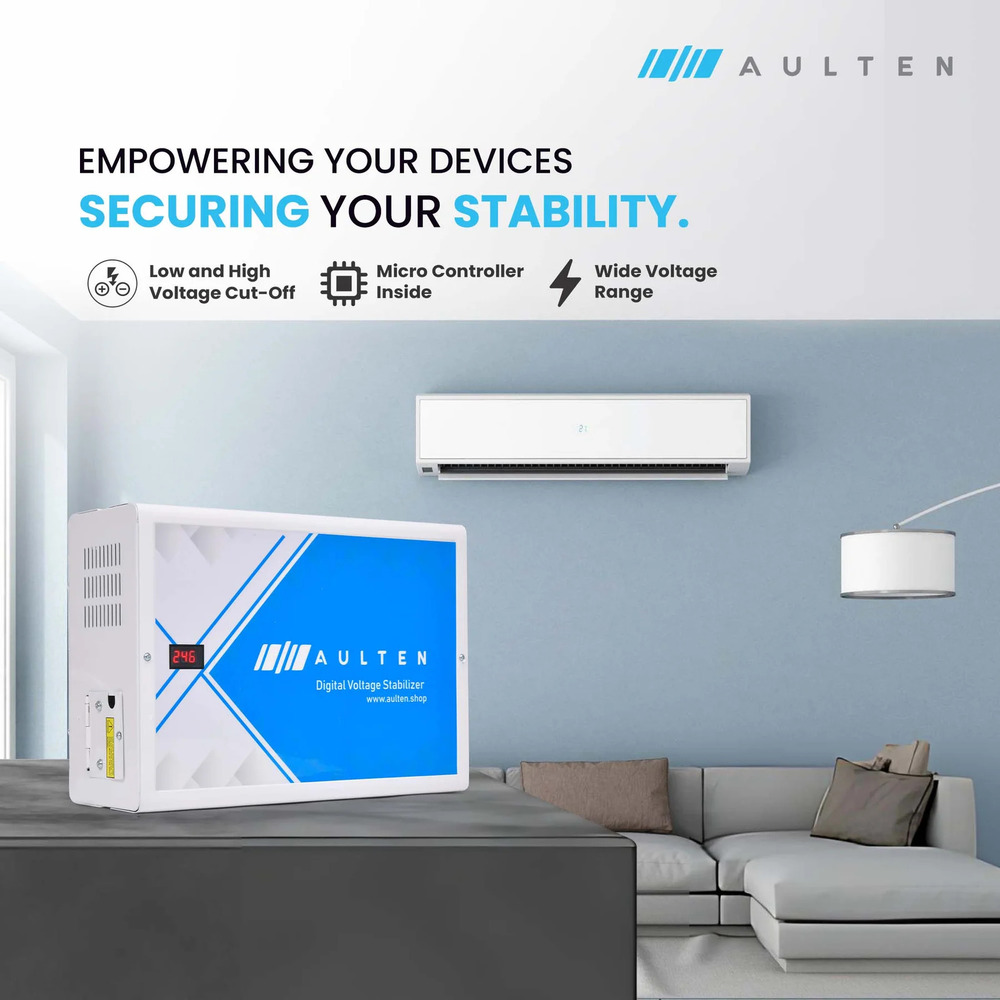
Air conditioners (ACs) are essential appliances in many households, especially during scorching summers. However, they are sensitive to power fluctuations, which can damage their internal components and reduce their lifespan. This is where a stabilizer comes into play. A stabilizer for an AC ensures consistent voltage supply, protecting the unit from electrical hazards and enhancing its efficiency.
Power surges and drops are common in many regions due to unstable electricity grids or heavy load usage. Without a stabilizer, an AC’s compressor—the heart of the cooling system—can suffer irreversible damage from sudden voltage spikes. Repairing or replacing a compressor is costly, often amounting to a significant portion of the AC’s original price. A stabilizer acts as a shield, regulating the voltage and preventing such mishaps.
Moreover, a stabilizer improves the overall performance of your air conditioner. When the voltage is too low, the AC may struggle to function optimally, leading to inadequate cooling and higher energy consumption. On the flip side, excess voltage can overheat the system, causing it to shut down or malfunction. By maintaining a steady power flow, a stabilizer ensures the AC runs smoothly, saves energy, and keeps your electricity bills in check.
Choosing the right stabilizer is crucial. It should match your AC’s capacity, typically measured in tons, and handle the voltage range in your area. For instance, single-phase stabilizers work for most home ACs, while three-phase ones suit larger units. Look for features like overload protection and a wide working range for added reliability.
In conclusion, a stabilizer is not just an accessory but a necessity for your air conditioner. It safeguards your investment, boosts efficiency, and ensures uninterrupted comfort. Spending a little on a quality stabilizer today can save you from hefty repair costs tomorrow.
This post was created with our nice and easy submission form. Create your post!

